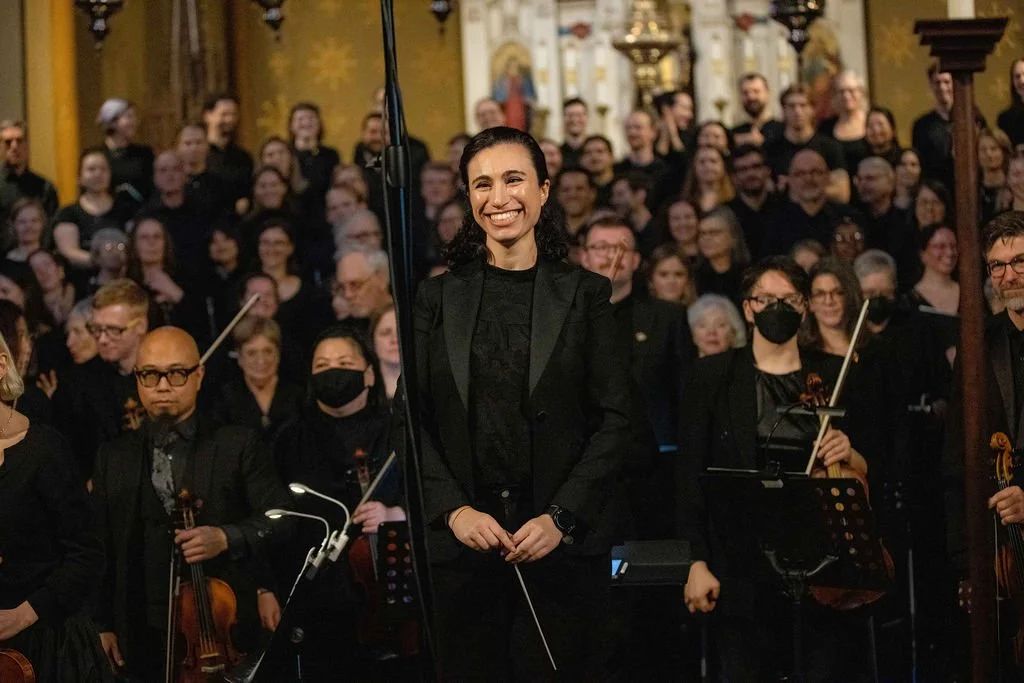
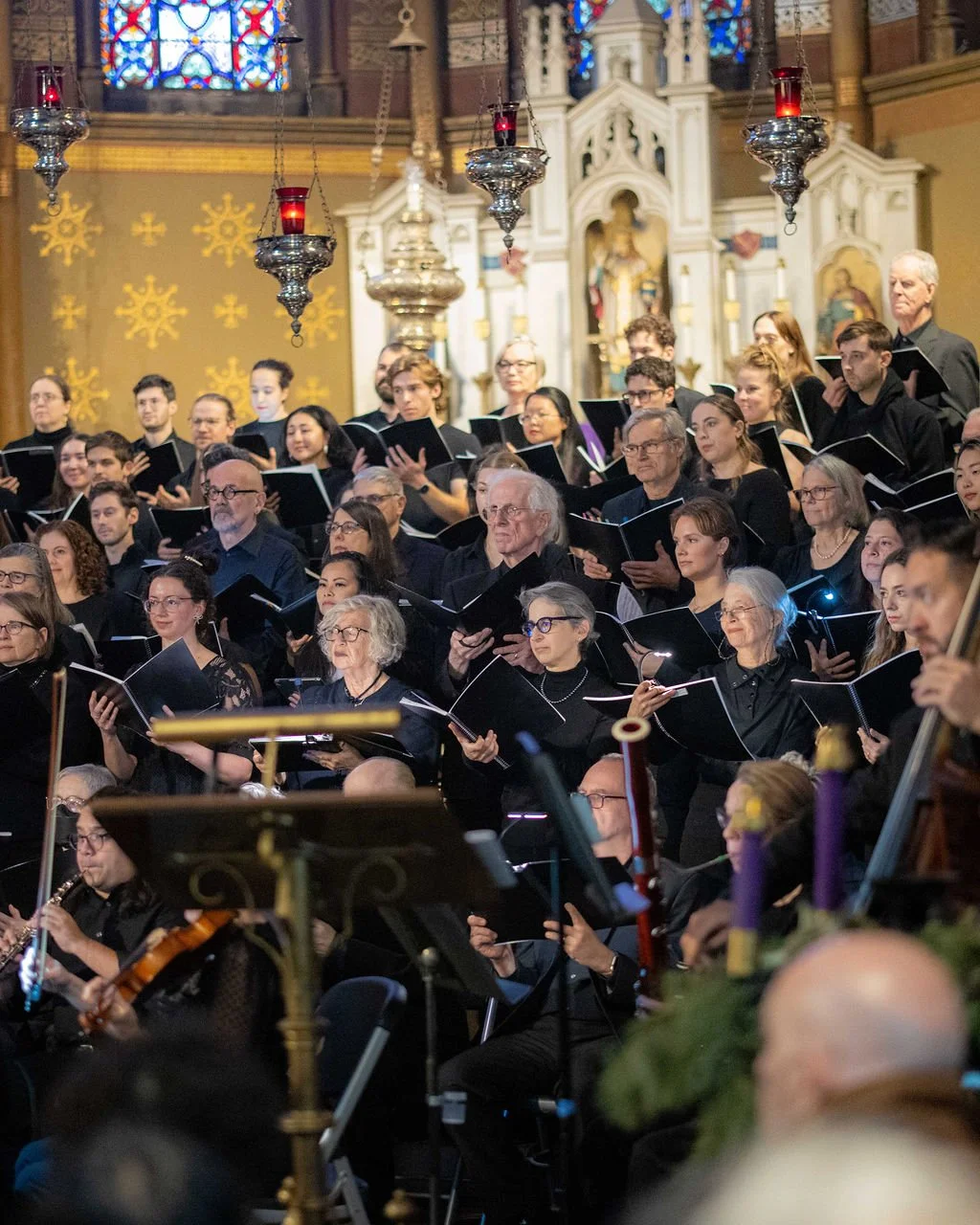
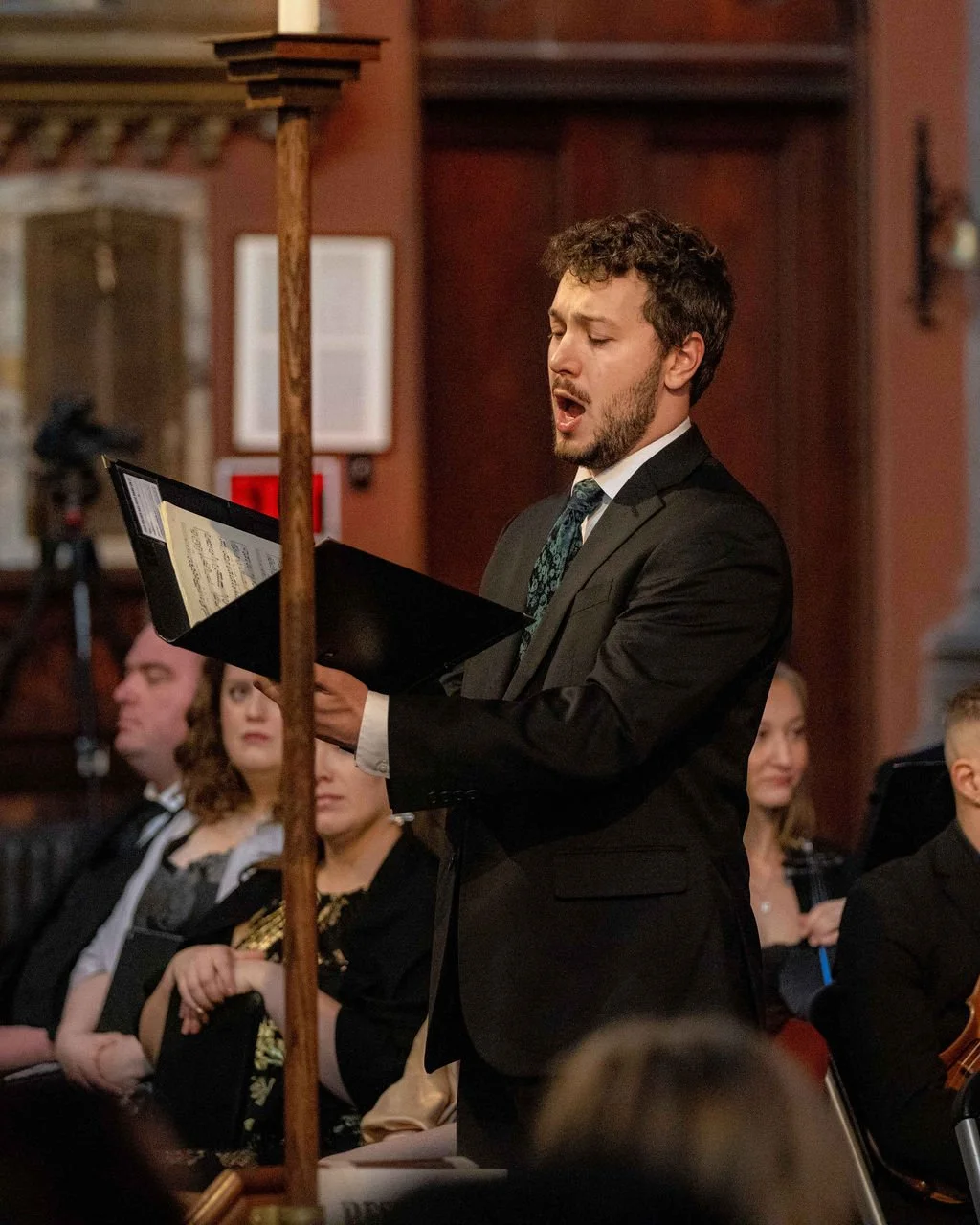
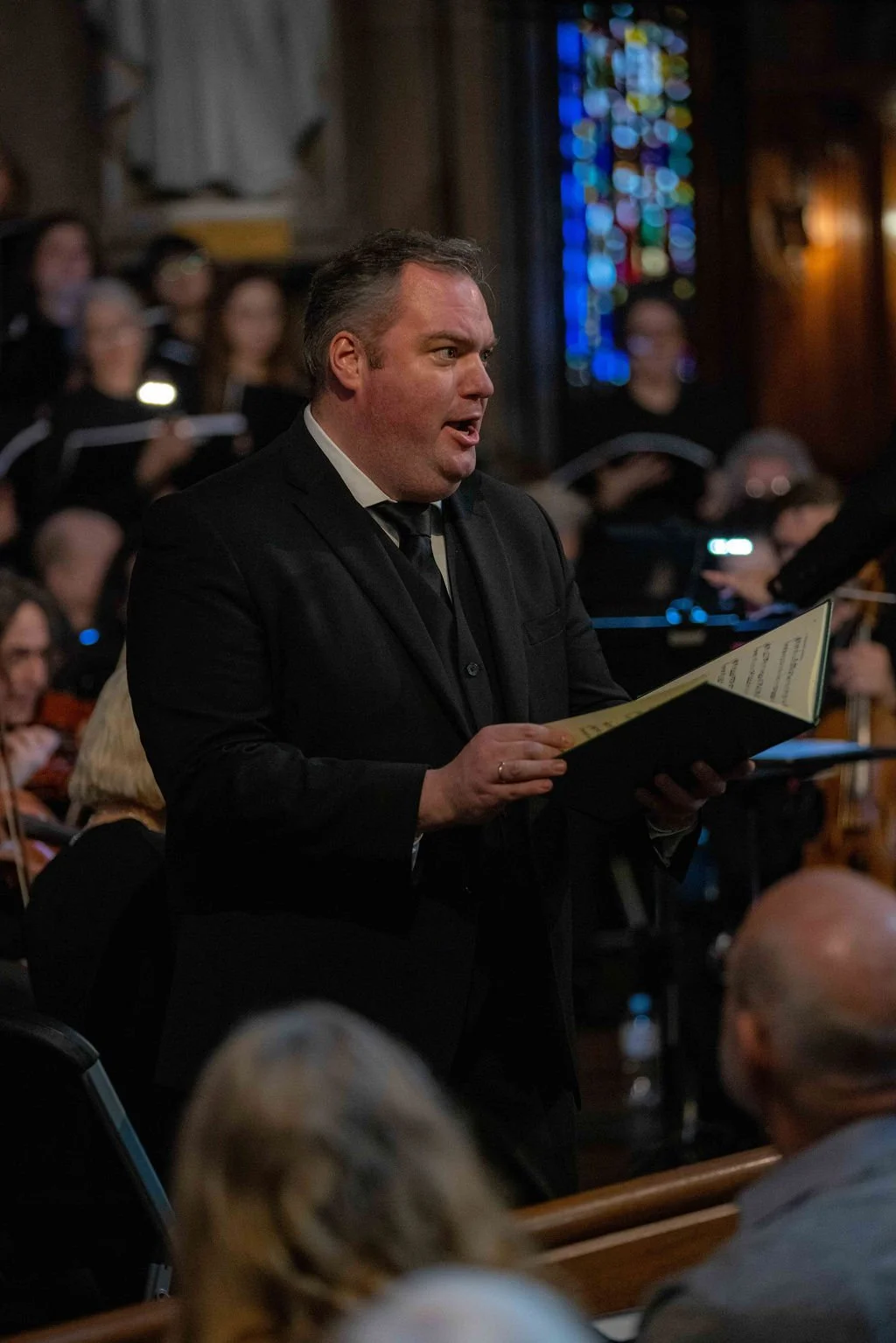
On December 20 and 21, 2025, the Grace Chorale of Brooklyn performed There Shall a Star: Choral Illuminations at St. Paul’s Episcopal Church.
Marking music director Hannah Nacheman’s inaugural concert with Grace Chorale, There Shall a Star: Choral Illuminations spanned choral tradition from the 18th to the 20th century in a program that explored themes of light, renewal, humility, and hope — ideas speaking to both the joyous nature of the season and the promise of new beginnings.
Now May We Singen by Cecilia McDowall
Magnificat in D Major, BWV 234 by Johann Sebastian Bach
There Shall a Star (from Christus) by Felix Mendelssohn
Fantasia on Christmas Carols by Ralph Vaughan Williams
Adeste Fideles arranged by Alice Parker
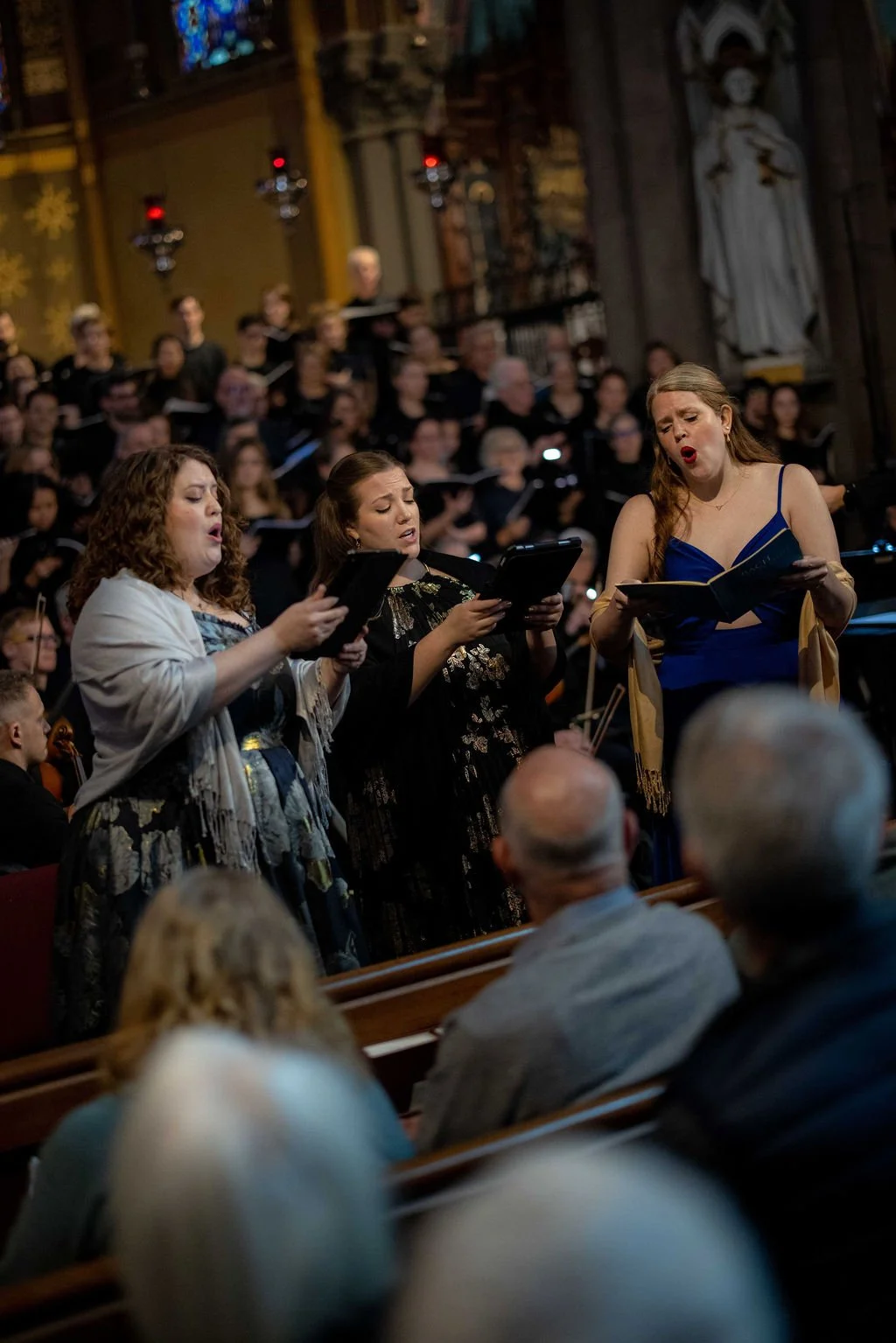
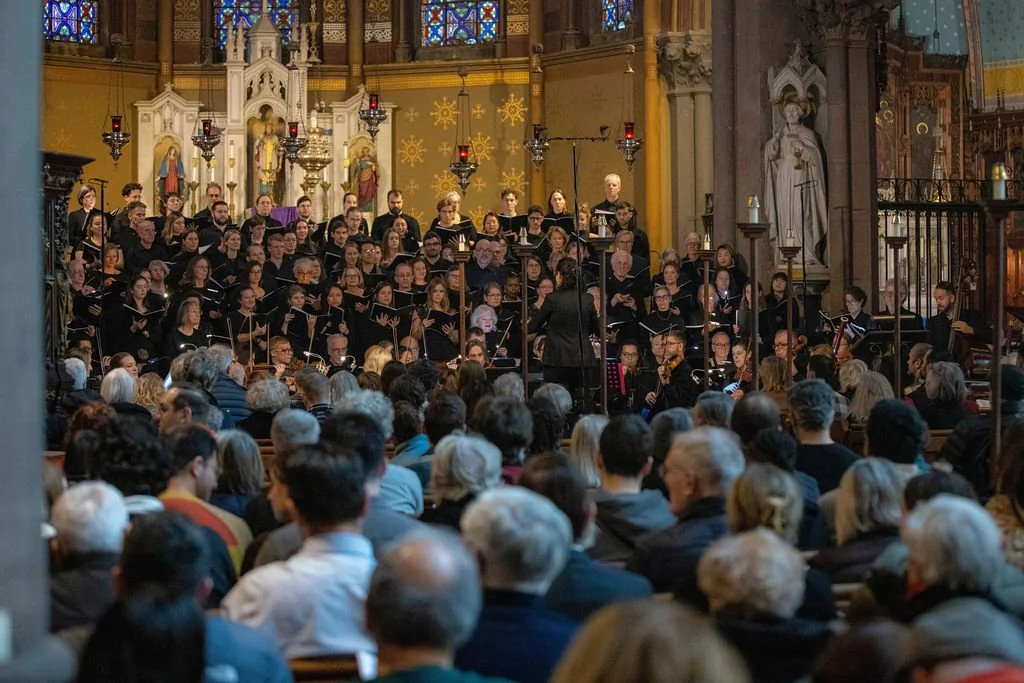
Cecilia McDowall’s Now May We Singen, composed in 2007, is one of her most celebrated carols. It takes its text from the 15th-century English carol of the same name. The setting captures both the original medieval spirit and a distinctly modern energy. The piece opens with a lilting rhythmic drive, propelled by dance-like syncopations and shifting meters that recall the liveliness of early carol traditions, and pays homage to this particular carol's roots. The recurring refrain acts as a jubilant anchor, inviting singers and listeners alike into the festive atmosphere. Throughout, McDowall's deft interplay of texture and rhythm evokes the sense of communal joy at the heart of the season.
Johann Sebastian Bach’s Magnificat (BWV 243.1) was composed in 1723, shortly after his appointment as Cantor of St. Thomas Church in Leipzig. This celebratory piece displays Bach's mastery of Baroque counterpoint, harmonic richness, and expressive orchestration. Its timeless expression of joy and devotion encapsulates the grandeur and vitality of Bach's sacred music. The work sets the Latin text of the Magnificat, Mary's song of praise from the Gospel of Luke, and is written for five soloists, mixed choir, and orchestra. When Bach revised the piece, around 1733, he added even more brilliant orchestration, with flutes in place of recorders, and adjusted the key to our current D major for the brighter natural tuning of trumpets and timpani. This later version, referred to as BWV 243.2, is the one most often performed today: a single, fixed biblical canticle in a compact sequence of 12 brilliant choruses and arias.
Felix Mendelssohn’s There Shall a Star dates from the final year of the composer’s life, 1847, when began writing his third oratorio, Christus, an unfinished dramatic portrayal of the life of Christ. The oratorio fragment, consisting of two incomplete scenes addressing the Passion and the Birth of Christ, was compiled by his brother, Paul, and published posthumously. Scholars believe the completed movements may have been intended as parts of a larger, unrealized work — the third oratorio in a musical triptych that included his earlier works St. Paul and Elijah. The chorus ends with a four-part harmonization of the popular chorale Wie Schön Leuchtet der Morgenstern (1599), a deliberate connection with the Lutheran choral tradition exemplified by his idol, J.S. Bach.
Ralph Vaughan Williams's Fantasia on ChristmasCarols weaves together traditional English carols from several regions — The Truth Sent from Above (Herefordshire), Come All You Worthy Gentlemen (Somerset), On Christmas Night All Christians Sing (Sussex), and There Is a Fountain (Herefordshire) — with deeply felt mystery and exhilaration. Composed in 1912, the piece is a tapestry rich with familiar images. Written for baritone soloist, chorus, and orchestra, the Fantasia reflects Vaughan Williams' deep interest in English folk song and his gift for transforming simple melodies into music both traditional and fresh. The free-flowing composition is a contemplative journey through the Christmas story, opening with a solo cello and declamatory baritone solo accompanied by ethereal choral voices. The piece gathers power and warmth, ultimately balancing moments of pastoral calm with rich, communal exuberance. Vaughan Williams's timeless writing — encompassing warmth, tenderness, and joy — embodies his belief that folk and sacred traditions unite people through shared song and deep humanity.
Alice Parker’s Adeste Fideles beautifully illustrates how Parker, like few others, shaped American choral music profoundly — not only as a brilliant arranger, but as a trailblazing composer, conductor, and educator. A longtime collaborator of Robert Shaw, Alice Parker helped shape the sound of 20th-century choral singing through some of the most enduring arrangements in the choral repertoire.